Your first padel lesson - how to prepare
What to bring, what to wear and what your first hour on court looks like. Everything nobody tells you before your padel debut.
You've booked your first lesson and now you're wondering what to bring, what to wear, and whether you'll embarrass yourself on your first serve. Relax. Below is everything worth knowing before you step onto the court - including the things nobody warns you about.
In short
- Bring a change of shoes, water and comfortable clothes. You'll get a racket and balls on site.
- One hour is enough. After two, your technique falls apart and you lock in mistakes.
- You don't need to know the rules or have a partner - the coach explains everything as you play.
What to bring
Less than you think. Rackets and balls are provided on site and included in the lesson price, so the list comes down to four items:
- A change of shoes - you can't go on court in the ones you arrived in
- A T-shirt and shorts, whatever you feel comfortable in
- A bottle of water - an hour of padel takes more out of you than it looks from the sidelines
- Towel, if you plan to use the shower
That's it. You don't need a matching sports outfit, wristbands or anything you've seen on a tournament broadcast.
What to wear
Tip
No omni-sole shoes or clay-court tennis shoes? Come in indoor court shoes for team sports. That's still a much better choice than running shoes.
The only thing that really matters is your shoes. Padel is a game of short sideways bursts, and the sole of a running shoe locks your foot during that kind of movement instead of letting it slide in a controlled way. That's where most ankle sprains on court come from.
Your best bet is shoes with an omnisole, the kind with small nubs. Clay-court tennis shoes will also work. If you have neither - come in indoor court shoes for team sports. That's still a better choice than running shoes.
What your first lesson looks like
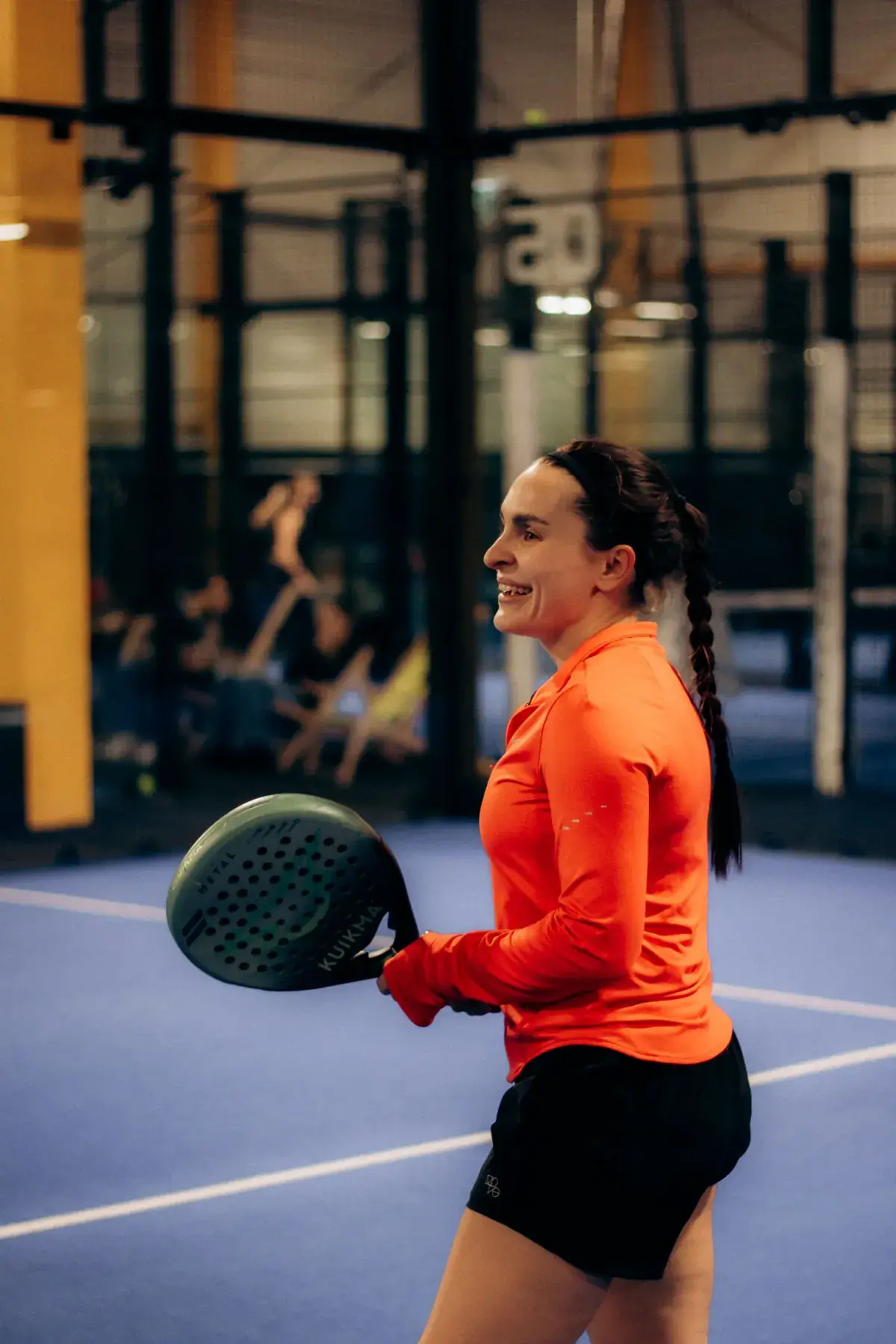
It's not a lecture. Your first hour looks roughly like this:
The first ten minutes are a warm-up and a grip demo. The coach will check whether you're holding the racket like a frying pan - most people do at the start, and that's completely normal.
The next fifteen minutes are short-range hitting at the net. No points, no walls, just the ball back and forth. This is where you'll find that padel pays off faster than tennis: the first good rallies usually happen in the very first lesson.
The middle of the lesson covers the serve and the walls. In padel you serve underhand, after bouncing the ball off the ground - it's easier to master than a tennis serve and doesn't take strength. The walls are what confuses people most at the start, so the coach usually dedicates a separate part to them.
The last twenty minutes are game time. Usually for points, usually in a foursome if there are enough players. And that's the moment most people decide they'll be back.
Three things that surprise people at their first lesson
The winner is the one who places the ball, not the one who hits it hardest.
A ball that bounces off the glass is still in play. Your instinct says let it go. That's the most common mistake new players make - a ball that has bounced off the ground and then off the wall is still in play, and it usually comes back nicely onto your racket.
It's not about power. The court is twenty meters long and ten meters wide, and the walls stop everything. A hard shot usually comes back at you faster than you can get into position. The winner is the one who places the ball, not the one who hits it hardest.
You'll get tired differently than you expect. You won't run out of breath like after a run. But the next day you'll feel it in your calves and thighs - from dozens of short bursts and stops.
Warm-up: five minutes that save you a week
Padel loads your ankles, knees and shoulders in sudden, uneven ways. Walking onto the court straight from your car is a quick route to a strain.
It really doesn't take much: two minutes of walking or jogging, arm circles, a few squats and a dozen or so side lunges. The point is to give your muscles time to warm up before your first sharp turn for the ball. The coach will take you through it at the start of the lesson, but if you're coming to a rented court without a coach, do it yourself.
What not to do at the start
Beginner mistake
Booking two hours right away. After the first hour your technique starts to fall apart, and the second one locks in mistakes instead of fixing them. Better to come back next week.
Don't buy a racket before your first lesson. You don't know how you play yet, and gear is matched to your style. More on that in our article on choosing a racket and shoes.
Don't book two hours right away. An hour is the ideal dose to start with. After two, your technique falls apart and you lock in mistakes instead of shaking them off.
Don't compare yourself to the people on the next court. Padel looks easier from the sidelines than it really is, and most of the people you're watching have been playing for two years.
Book your first lesson in Warsaw
An hour with a coach, gear included. Just show up on your own - we'll take care of the rest.
Quick answers to common questions
Do I need a partner? No. You can come to Intro Padel with a coach on your own, and for recreational play we'll help you find partners.
Do I need to know the rules? No. The coach explains them as you play, not beforehand.
I'm in my forties and I don't play any sports. Can I do it? Yes. Padel is one of the few sports you can start at any age - the court is small and the rallies are short.
How long does it take to learn the basics? The first real rallies come after one lesson. Smooth point play - after a few.
After your first lesson
If you like what you see, the easiest next step is a regular weekly slot - at our club in Warsaw you can book it in advance for the whole quarter. Learning a new movement needs repetition more than long sessions - an hour every seven days will give you more than four hours once a month.
Not sure yet what this game actually is? Start with our introduction to padel. And if you just want to give it a try - leave your number, and we'll call you back to find a time.
Article
Alma Padel Club Team
We write about what you ask at reception: gear, your first training session and how to get into padel without unnecessary costs.
Read more
Related articles
Padel racket and shoes - what to choose when you're starting out
When it's worth buying your own racket, which shape to choose to start with and why shoes matter more than gear. A practical buying guide for beginners.
Read
Padel - the sport that hooks you from the very first game
Padel blends tennis with squash and gets you hooked from the very first rally. We explain the rules, compare it with tennis and tell you what to bring to your first game.
Read